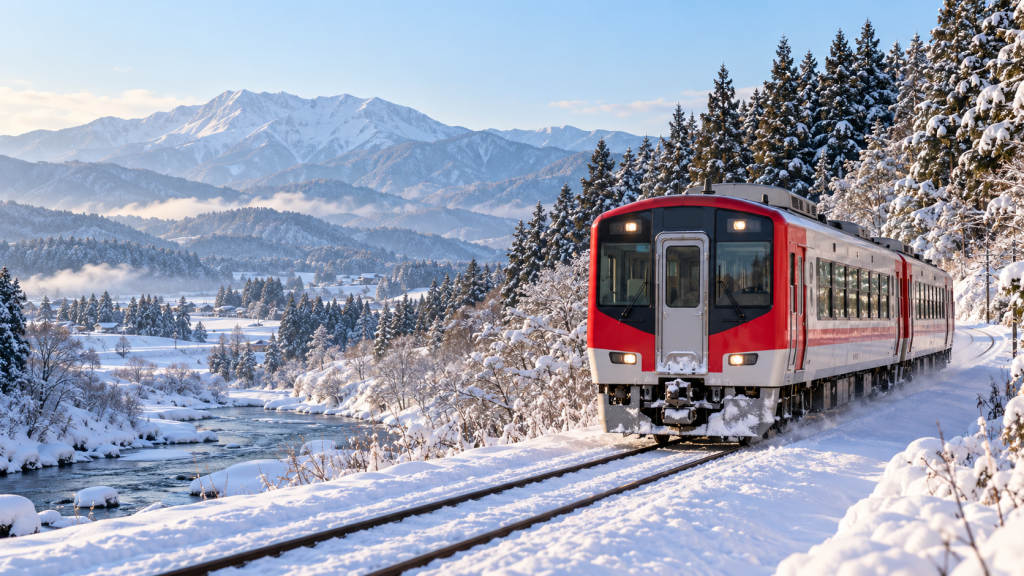

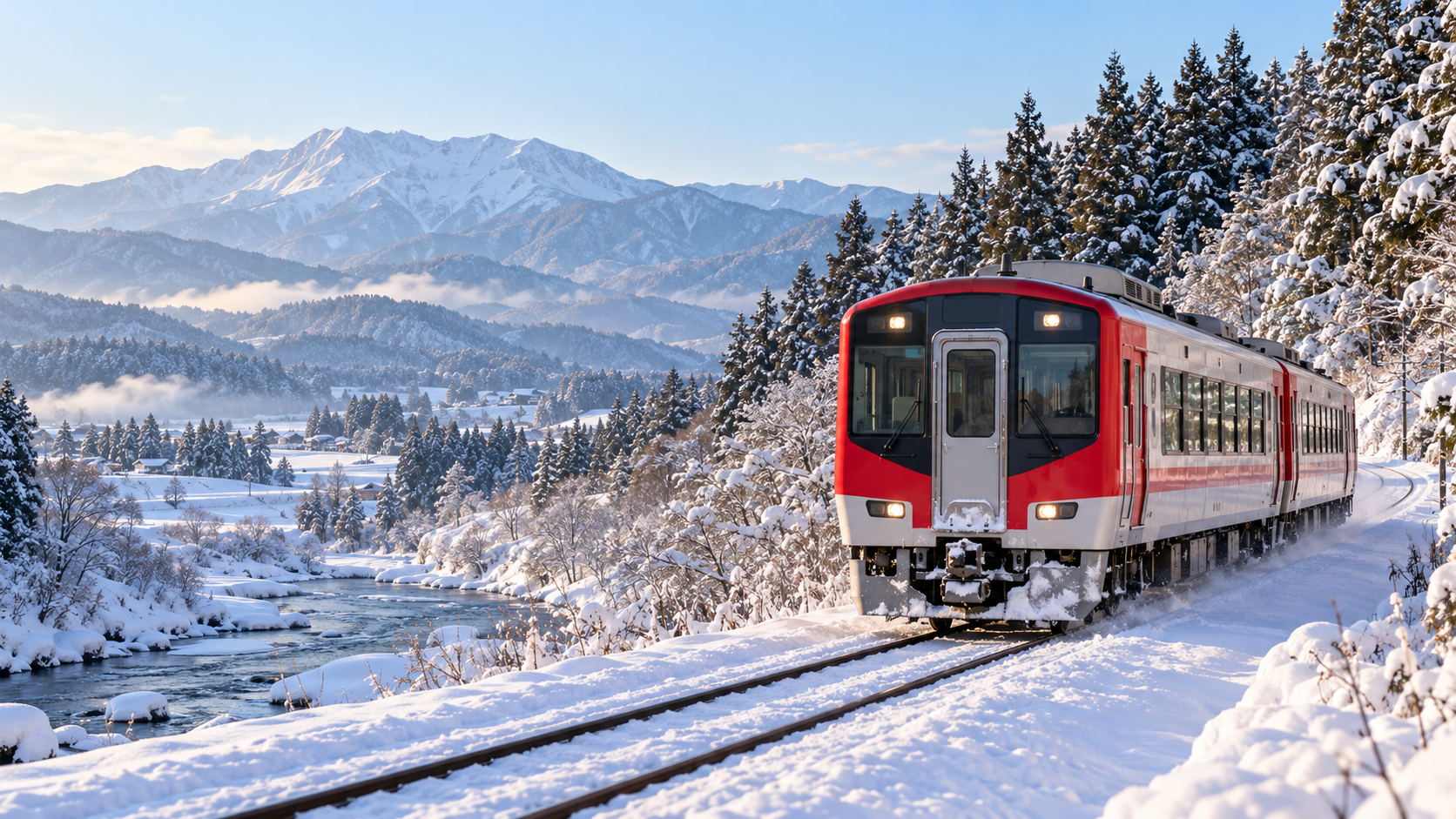
Winter rail travel in eastern Japan is getting a substantial seasonal boost. In a release dated October 22, JR East announced 6,882 additional trains for the 90-day period from December 1, 2026, through February 28, 2027. The plan includes extra Shinkansen, limited-express and rapid services, as well as special trains aimed at seasonal events and destinations.
For travelers, the useful detail is not just the total number of trains, but the variety of trips they make possible. The timetable points to options for skiing, hot-spring visits, winter landscapes, New Year’s sunrise outings and flower festivals. These are additional services on selected dates, not a promise of extra departures every day on every route, so check the operating dates before building an itinerary around one.
Reach the slopes by train
One of the clearest examples is GALA Yuzawa, a ski destination with a station connected directly to the Shinkansen line. JR East lists a morning Tanigawa service leaving Tokyo at 6:24 a.m. and reaching GALA Yuzawa at 7:35 a.m. on specified dates. The resort is scheduled to begin operating on December 12, with the ski slopes due to open December 19, according to the release. An additional evening return train is planned on several dates in January and February to align with night skiing.
Check the resort’s opening information alongside the train calendar: the first operating day and the start of skiing are not the same date. And because the extra services run on a date-specific basis, confirm the schedule for your chosen travel day before booking accommodation or lessons.
Winter scenery, hot springs and seasonal flowers
For a longer winter outing, JR East plans selected Hakutaka services stopping at Iiyama and Joetsu-Myoko, giving travelers another rail option for exploring the Joetsu and northern Nagano area. The operator highlights hot springs and winter sports in the region. A separate winter extension of the Azusa 83 will take passengers from Shinjuku to Hakuba on listed dates between December and February; the journey is scheduled to take just over four hours. The train is all-reserved seating, so passengers should check seat availability and the exact operating calendar.
Winter also brings a preview of spring in the Izu Peninsula. Seasonal limited-express trains are planned for the Shimoda Daffodil Festival in January and the Minami-Izu cherry and rapeseed-flower season in February. These services run on specific dates, with some departing from Omiya and another listed departure from Takao. If flowers are the main reason for your trip, check local festival dates and the train’s operating dates together; the seasonal rail service is not a daily shuttle.
Make the timetable part of your planning
JR East also lists special “stove” trains, a Christmas-themed train, and services for New Year’s sunrise and shrine visits. Some of the event trains are all-reserved seating, while arrangements vary by service. The company notes that it may add trains in response to demand, and says it will publish current information through its extra-train announcements. Treat the October release as a planning guide, then verify the latest train details and ticket requirements before departure.
If your winter itinerary includes rail journeys, you can explore train-ticket options through Rail Monsters while comparing how different stops fit your plans; check the relevant operator’s timetable and ticket conditions before you travel.
The best way to use the winter additions is to choose the experience first—slopes, hot springs, snow country or early flowers—and then match your travel dates to the specific train. That small check can turn a seasonal service announcement into a practical day trip or a smoother multi-stop journey.

